
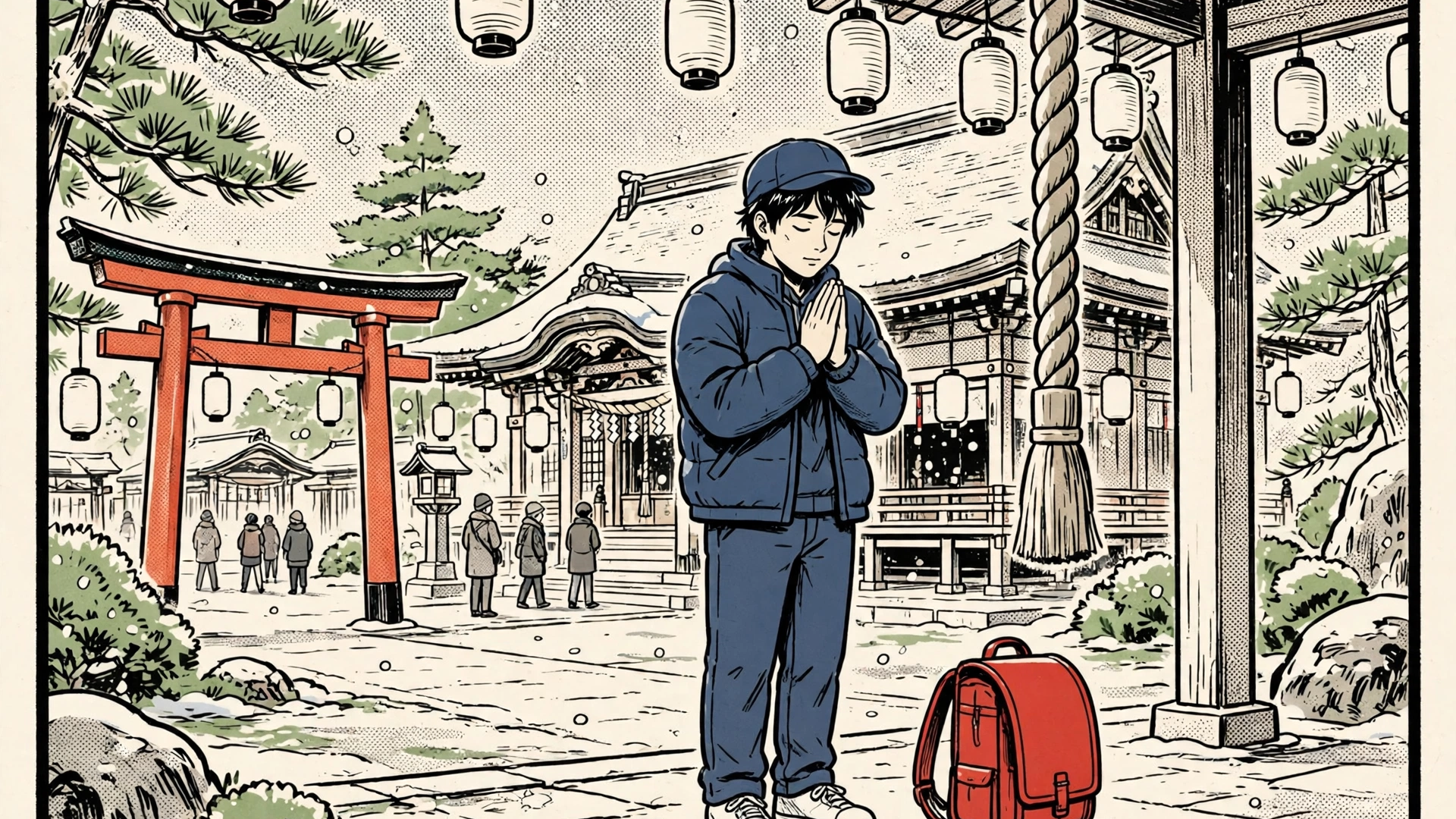
Japan does not shut down for the New Year. It changes shape. Trains keep running, convenience stores stay open around the clock, and the country’s biggest shrines are at their busiest all year. What changes is everything around them: government offices close, banks take a break, many shops and restaurants shut for a few days, and the first three days of January belong to a tradition called hatsumode — the first shrine or temple visit of the year. The window that catches most travelers off guard is December 31 in the evening through January 3.
Known as oshogatsu, it is Japan’s most important family holiday — quieter and more domestic than Christmas in the West, and one of the best times to see Japan at its most traditional.
What Actually Closes, and What Stays Open
The closures follow a pattern, and much of it is set by law. National government offices are closed from December 29 to January 3 under the Act on Holidays of Administrative Organs, and banks are closed from December 31 to January 3. Only January 1 itself is a national holiday — January 2 and 3 are ordinary days on the calendar, but many businesses treat the whole stretch as a holiday anyway.
| What | December 29 – January 3 |
|---|---|
| Government offices | Closed December 29 – January 3 |
| Banks and post office counters | Closed December 31 – January 3 (ATMs may still work — see below) |
| Convenience stores | Open 24 hours, as usual |
| Trains and subways | Running on a holiday schedule; some lines run later than usual on New Year’s Eve |
| Major shrines and temples | Open — and extremely busy |
| Department stores | Many closed on January 1; most reopen with New Year sales on January 2 |
| Restaurants and small shops | Mixed — many close for a few days; check each place before you go |
The Japan National Tourism Organization puts it simply: many sights, restaurants, and shops are closed from around December 29 until January 3 — but far from everything. The infrastructure keeps working; the small independent places are the ones that disappear for a few days.
Two details matter most. First, cash: ATMs inside convenience stores generally keep working through the holiday, but bank-branch ATMs and counters do not, so arrive with enough yen for the first days. Our guide to paying in Japan and when you need cash covers which cards work where. Second, shopping: department stores usually close on January 1 and reopen on January 2 with hatsuri, the first sale of the year, and the famous lucky bags called fukubukuro. Some stores start on January 1 instead, so check the store’s own website. Shop opening hours follow their usual rhythms, which shift during this week.
Hatsumode, Step by Step
Hatsumode is the first visit of the year to a shrine or temple, usually made between January 1 and 3. People pray for health and good fortune, draw a fortune slip called omikuji, buy a new charm or a wooden prayer plaque called ema, and return last year’s charms to be respectfully burned. It is a public, family event, and visitors of any background are welcome to take part.
Meiji Jingu in Tokyo is one of the most popular hatsumode destinations in Japan, drawing around 3 million visitors over the first three days of the year. The shrine has published its scheduled hours for the 2026–27 New Year season:
| Day | Meiji Jingu opening hours (scheduled) |
|---|---|
| December 31 | 6:40 a.m. – midnight (all-night worship through to New Year’s Day) |
| January 1 | Midnight – 6:30 p.m. |
| January 2 | 6:40 a.m. – 6:00 p.m. |
| January 3 | 6:40 a.m. – 6:00 p.m. |
| January 4 | 6:40 a.m. – 5:30 p.m. |
| January 5 onward | 6:40 a.m. – 4:20 p.m. |
These are scheduled hours and can change, so check the official Meiji Jingu hatsumode page before you go. The shrine warns that the busiest times are around 10 p.m. on December 31 to 3 a.m. on January 1, and from 10 a.m. onward on January 1 to 3, and it asks visitors to spread out their visits. Food stalls open from December 31, and no vehicles may enter the grounds during the first three days, so arrive by train. The museum and inner garden have their own, shorter hours on the same page.
Senso-ji in Asakusa is the other classic first stop, and its official English site lists hatsumode (January 1–7) among its yearly events. But as of mid-November, the site published no specific opening hours for the main hall and no special New Year schedule, so check the official Senso-ji site before you go rather than relying on a timetable printed months in advance. The same rule applies to any other shrine or temple: the big names publish their New Year hours in late November or December, and smaller ones may not publish them at all.
If you go, the basic flow is simple and nobody expects perfection. Bow once at the torii gate, rinse your hands and mouth at the water pavilion if one is available, then at the main hall, bow twice, clap twice, make your wish quietly, and bow once more. At a temple, the custom is usually to bow and press your palms together without clapping. Queues move steadily even when they look enormous. If you would rather have the place nearly to yourself, go on the morning of January 4 or later. Crowds are the theme of the season, and our guide to whether Japan is really crowded everywhere puts the New Year rush in context.
New Year’s Eve and the First Days
December 31, or omisoka, is spent at home by most Japanese people, which is why the streets feel quieter than usual during the day and the shrines fill up at night. At midnight, temples ring their bells 108 times in a ritual called joya no kane, one ring for each of the 108 worldly desires in Buddhist teaching. Many temples let visitors take a turn at the rope, and the sound carries a long way on a cold night.
On television, the evening belongs to NHK’s Kohaku Uta Gassen, the annual song contest that usually starts around 7:20 p.m. and runs until just before midnight. Dinner itself is often toshikoshi soba, buckwheat noodles eaten to mark the passing of the year, with the long noodles symbolizing a long life.
January 1 begins with the first sunrise of the year, hatsuhinode. Breakfast is osechi, small dishes packed in lacquered boxes, each with a meaning — black beans for health, sweet rolled omelette for good fortune, herring roe for fertility. Children receive otoshidama, small envelopes of cash from relatives. The best way to see it is to be out on the morning of January 1: the streets are quiet, the shrines are full, and the decorations — pine, bamboo, and straw rope called shimenawa — are everywhere.
Those decorations stay up for matsunouchi, and the date they come down depends on the region: around January 7 in Tokyo and much of eastern Japan, and around January 15 in much of the Kansai region — a reminder that there is no single national timetable for the New Year.
By January 2, the mood changes. The department stores reopen with their New Year sales, and the lucky bags — sealed bags sold at a fixed price with contents worth more — draw long queues before opening time. Go for the atmosphere rather than a specific item. And if the cold is part of your planning, the winter layering in our guide to what to pack for each season in Japan matters more than usual: you will be standing outside in line, sometimes for a long time, in temperatures near freezing.
A Simple Plan for December 29 – January 3
A little preparation removes almost all of the friction. The plan below assumes a city like Tokyo or Kyoto; in the countryside, do the same things a day earlier, because small shops close earlier and stay closed longer.
| Day | Do this |
|---|---|
| December 29–30 | Finish shopping and withdraw cash. Confirm the hours of restaurants you want to visit. |
| December 31, daytime | Expect a quiet city. Visit museums and gardens that are still open, and be back in the early evening. |
| December 31, night | Head to a shrine or temple before 10 p.m. to beat the worst of the crowd. Check last-train times first. |
| January 1 | Go to hatsumode early in the morning or after 4 p.m. Expect closures; convenience stores and shrines are your reliable options. |
| January 2 | Department stores reopen with New Year sales and lucky bags. Queue early if you want one. |
| January 3 | Still a hatsumode day. If you have already visited a shrine, take a quiet walk — the city is calm and the decorations are still up. |
The one logistical trap is the night of December 31. Some train lines run later than usual for hatsumode, but not all of them. Check the operator’s holiday notice for your line in December, and if the worst happens, our guide to what to do if you miss the last train in Japan covers the realistic options, from late-night buses to capsule hotels.
New Year is one of the seasonal peaks that visitors most often underestimate, and our overview of seasonal events tourists often miss shows what the other seasons hold. If your trip stretches into winter beyond the holiday, snow-day trips from Tokyo are an easy next step once the crowds fade.
FAQ
Is everything closed on January 1?
No. Government offices and banks are closed, and many shops and restaurants shut for the day, but convenience stores stay open 24 hours, trains run on a holiday schedule, and major shrines and temples are open — and at their busiest. Department stores are usually closed on January 1 and reopen on January 2. Treat it as a day for shrines, walks, and convenience-store meals.
When is the best time for hatsumode?
For atmosphere, go on the night of December 31 or the morning of January 1. For space, go on January 4 or later, early in the morning. The worst times at popular shrines are around 10 p.m. on December 31 to 3 a.m. on January 1, and from 10 a.m. onward on January 1 to 3.
Can I use my card or an ATM over the New Year?
Usually, yes, at convenience-store ATMs, which generally operate through the holiday. Bank-branch ATMs and counters close from December 31 to January 3. Carry enough yen to cover the first days of January, and check your own bank’s overseas fees before you travel.
Final Checklist
- Withdraw cash and finish shopping by December 30.
- Check the official New Year hours of any shrine or temple you plan to visit.
- Check last-train times for December 31 before you go out at night.
- Dress warmly: queues at shrines and sales are long and slow.
- Keep January 1 simple: shrines, a walk, and convenience stores.
- Plan shopping for January 2, when the New Year sales begin.
- Respect the customs: bow at the gate, keep voices low, and do not photograph people praying.
Official Information
- Meiji Jingu — Hatsumode hours and New Year information (scheduled hours, crowds, stalls, and access): https://www.meijijingu.or.jp/hatsumoude/
- Senso-ji (Asakusa) — Official English site, hours, and annual events: https://www.senso-ji.jp/english/
- Japan National Tourism Organization — General travel information for planning around the holiday: https://www.japan.travel/en/
NEXT EPISODE: Keep Planning
- Seasonal Events in Japan Tourists Often Miss — New Year is one peak in a year full of them; see what the other seasons hold.
- Is Japan Crowded Everywhere? The Real Answer — how the New Year rush compares with the crowds the rest of the year.
- What to Do If You Miss the Last Train in Japan — the backup plan for a late night out on December 31.