
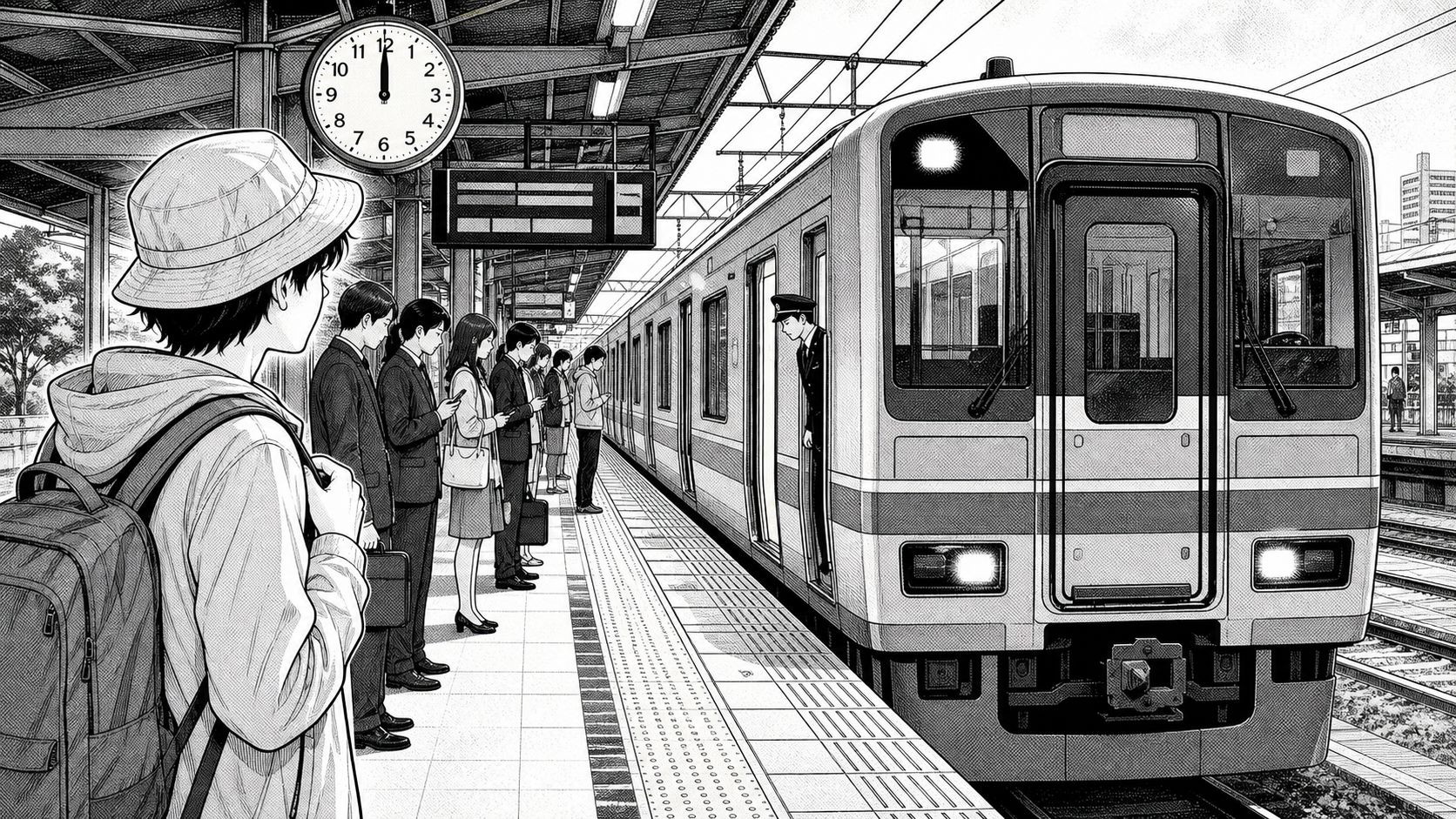
Japanese trains are renowned worldwide for their extraordinary punctuality, with delays often measured in seconds rather than minutes. This precision is not accidental but the result of a complex interplay of cultural values, technological innovation, and operational excellence that has been refined over decades. From the Shinkansen bullet trains that crisscross the country at speeds exceeding 200 km/h to the local commuter lines that serve dense metropolitan areas, the Japanese railway system operates with a level of efficiency that has become a point of national pride. The average delay for Japan’s major rail lines is just 20 seconds, a statistic that would be unfathomable in most other countries. This remarkable consistency extends across the entire network, from the busiest urban centers to rural routes, creating a transportation ecosystem that millions rely on with absolute confidence.
Cultural Foundations of Punctuality
The punctuality of Japanese trains is deeply rooted in the nation’s cultural fabric, where time is treated as both a valuable resource and a reflection of respect for others. In Japanese society, being on time is not merely a matter of convenience but an ethical obligation that demonstrates consideration for others’ schedules and commitments. This cultural value extends to all aspects of Japanese life but finds its most visible expression in the country’s transportation system.
- Japanese culture places a strong emphasis on precision, timeliness, and respect for others’ time
- The historical development of rail transport coincided with Japan’s modernization period
- Social expectations create powerful incentives for maintaining punctuality
This cultural commitment to punctuality creates a self-reinforcing cycle where passengers expect trains to arrive exactly on time, and railway operators feel immense pressure to meet these expectations. The social consequences of being late in Japan—whether for work, school, or social appointments—are significant enough that the reliability of trains has become an essential component of daily life.
The Concept of ‘Mottainai’
The Japanese concept of “mottainai,” which translates to “what a waste,” plays a crucial role in understanding the cultural foundation of train punctuality. This philosophy emphasizes the avoidance of waste in all its forms, including wasted time. When a train is delayed, it represents not just inconvenience but a collective waste of thousands of hours of passengers’ time. The railway industry’s commitment to eliminating this waste has become deeply ingrained in Japanese corporate culture, with companies viewing punctuality as both a moral obligation and a competitive advantage.
Post-War Reconstruction and Efficiency
Following World War II, Japan’s reconstruction efforts placed a premium on efficiency and precision as the nation rapidly rebuilt its infrastructure. The railway system, which had been damaged during the war, became a symbol of this national rebirth. As Japan emerged as an economic powerhouse, its railways evolved from basic transportation to sophisticated systems that embodied the nation’s values of precision and reliability. This historical development established a precedent of excellence that continues to guide the industry today.
Advanced Technology and Systems
Behind the scenes, a complex technological infrastructure ensures that Japanese trains maintain their remarkable punctuality. The railway operators employ cutting-edge systems that monitor and control virtually every aspect of train operations, from acceleration and braking to station stops and energy consumption. These technologies work in concert to create a transportation system that operates like a well-oiled machine, with each component precisely synchronized with the others.
- Sophisticated automatic train control systems ensure precise stopping and acceleration
- Rigorous maintenance protocols prevent most mechanical failures
- Extensive staff training and discipline create a culture of excellence
The integration of these technological systems creates redundancy at multiple levels, ensuring that even if one component fails, backups are immediately available. This layered approach to reliability has made Japanese trains among the safest and most dependable in the world, with technological solutions addressing virtually every potential source of delay.
Automatic Train Control Systems
Japan’s automatic train control (ATC) systems represent the pinnacle of railway technology, utilizing advanced sensors and computers to precisely control train operations. These systems constantly monitor train speed, distance, and position, automatically adjusting acceleration and braking to maintain precise schedules. The ATC systems are so sophisticated that they can calculate the exact amount of power needed to reach the next station on time, accounting for factors like passenger load, track conditions, and weather. This technological precision eliminates human error as a source of delay, ensuring that trains operate with mathematical exactness.
Precision Scheduling Algorithms
Behind the scenes, sophisticated scheduling algorithms manage the entire railway network with incredible precision. These systems process vast amounts of data in real-time, including train positions, passenger flow, and even weather conditions, to optimize operations continuously. The algorithms can predict potential delays before they occur and automatically adjust schedules to minimize disruption. During peak hours, these systems manage trains with intervals as short as two minutes while maintaining safety and punctuality—a feat that would be impossible without the computational power of modern scheduling technology.
Social and Economic Drivers
The punctuality of Japanese trains is sustained not only by cultural values and technology but also by powerful social and economic factors. In a country where space is limited and population density is high, efficient transportation is not just a convenience but an economic necessity. The railway system serves as the backbone of Japan’s economy, facilitating the movement of millions of workers, students, and consumers each day. Any significant disruption would have cascading effects throughout the economy, making reliability a matter of national interest rather than just corporate policy.
- Reliable transport is essential for Japan’s dense urban economy
- Passenger expectations and social pressure reinforce punctuality
- Significant consequences, both financial and reputational, deter delays
This economic reality creates powerful incentives for railway companies to maintain punctuality. Delays result in not only direct financial losses from decreased ridership but also indirect costs from damage to reputation and customer trust. In a competitive market where passengers have alternatives, the cost of even minor delays can be substantial, making punctuality a critical business priority.
The ‘Three-Minute Rule’
Japanese railways operate under an informal but strictly enforced “three-minute rule,” which dictates that any delay exceeding three minutes must be formally investigated and explained to passengers. This seemingly arbitrary threshold has become a cultural benchmark for acceptable performance. When delays occur, train operators immediately issue detailed apologies and explanations, sometimes providing written certificates to passengers who have been significantly delayed—these certificates can be shown to employers or schools to excuse tardiness. This institutional response to delays reinforces the expectation of punctuality and demonstrates how seriously the industry takes its commitment to timeliness.
Economic Impact of Delays
The economic consequences of train delays in Japan are substantial and far-reaching. A single major delay on a key line can ripple through the economy, affecting everything from worker productivity to supply chains. Studies have shown that even a one-minute delay on the Tokyo Metro can cost the economy millions of yen in lost productivity. Railway companies face direct financial penalties from delays, including compensation to passengers and damage to their reputation. These economic realities create a powerful incentive for continuous improvement and investment in systems that prevent delays before they occur.
Conclusion
The remarkable punctuality of Japanese trains results from the convergence of cultural values, technological sophistication, and operational discipline. This system demonstrates how attention to detail, continuous improvement, and respect for collective welfare can create infrastructure that serves society with extraordinary efficiency. While replicating this system exactly may be challenging, the principles behind Japanese train punctuality offer valuable insights for transportation systems worldwide. The Japanese experience shows that when reliability is treated as both a cultural value and a technological imperative, transportation systems can transcend mere functionality to become symbols of national excellence. As cities worldwide grapple with congestion and delays, the Japanese railway model offers a compelling vision of what’s possible when society commits to treating time as the precious resource it is.