
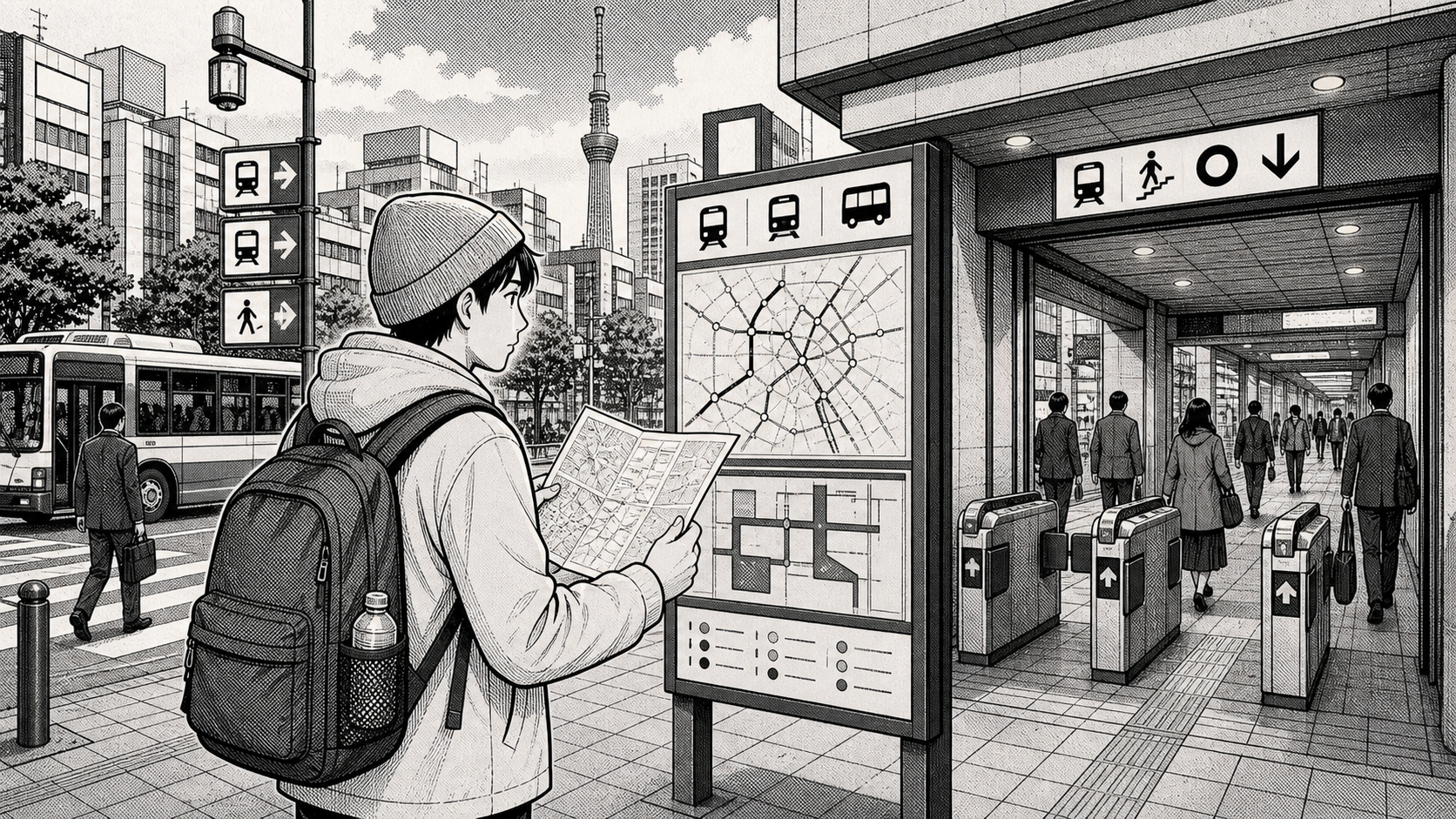
Exploring Tokyo without relying on Google Maps may seem daunting in our digital age, but the city offers traditional navigation methods that can enhance your travel experience. This guide provides practical alternatives to digital mapping, helping you navigate Japan’s capital with confidence while embracing local customs and discovering hidden gems along the way.
Traditional Navigation Tools
- Paper maps and guidebooks specifically designed for Tokyo
- Station maps and timetables available at transit hubs
- Visual landmarks and neighborhood characteristics
- Color-coded maps for different train lines
Best Paper Maps for Tokyo
Investing in a quality paper map is essential for navigating Tokyo without digital aids. The “Tokyo Subway Route Map” published by Tokyo Metro is an excellent resource, featuring color-coded lines and major stations in both English and Japanese. For more comprehensive coverage, consider the “Bilingual Tokyo City Atlas” which includes detailed street maps, building indexes, and neighborhood information. The “Japan National Tourism Organization” maps are particularly helpful for tourists, highlighting attractions, hotels, and transportation hubs. Don’t underestimate the value of guidebooks like Lonely Planet or DK Eyewitness, which often include fold-out maps and neighborhood walking routes. For the most up-to-date information, visit major tourist information centers located in train stations and airports where you can obtain free maps and brochures.
Understanding Transit Systems
Tokyo’s public transportation network is one of the world’s most extensive and efficient systems, consisting primarily of trains, subways, and buses. The network is operated by several companies, including Japan Railways (JR), Tokyo Metro, and various private railway companies. Each operator has its own fare structure and ticketing system, making it important to understand how they interconnect. The system is divided into fare zones, with the city center generally considered Zone 1. For longer journeys, consider purchasing a JR Pass if you plan to travel outside Tokyo frequently. Understanding the difference between local, rapid, and express trains is crucial, as express trains skip certain stations and may require additional fare. Buses fill gaps in areas not covered by rail but can be challenging for non-Japanese speakers due to the lack of English announcements and complex route systems.
Mastering Tokyo’s Transportation Systems
- Learning the color-coded subway and JR line system
- Identifying train stations by their unique symbols
- Understanding transfer procedures at major stations
- Reading platform signs in Japanese characters
Reading Train Station Signs
Train station signs in Tokyo may appear intimidating at first glance, but they follow consistent patterns that become familiar with exposure. Station names are typically displayed in both Japanese characters (kanji) and romanized script. Pay attention to the color coding of lines, as each subway and JR line has its own distinct color. Platform signs indicate the train’s destination, next stops, and arrival times. For transfers, look for signs indicating connecting lines with their respective colors and transfer walking times. Station exits are numbered, and maps near ticket gates show the surrounding area with highlighted points of interest. Many stations also have English signage in major tourist areas, but learning to recognize common kanji characters for frequently visited destinations like “Shibuya” (渋谷) or “Asakusa” (浅草) can significantly enhance your navigation abilities.
Navigating Complex Transfer Stations
Tokyo’s major transfer stations can be overwhelming, even for experienced travelers. Shinjuku Station, one of the world’s busiest, has over 200 exits and multiple lines serving different parts of the city. When transferring, follow the colored line indicators on the floor and walls. Allow ample time for transfers, especially during rush hours when stations become extremely crowded. At Tokyo Station, the JR lines are separated into different sections (Marunouchi, Keihin-Tōhoku, Chūō, etc.), each requiring separate entrances and platforms. In Shibuya, the scramble crossing and surrounding area can be disorienting, so note the Hachiko exit as a key reference point. Many stations have transfer zones between different operators, often requiring you to exit through ticket gates and re-enter. Look for transfer time estimates posted on signs, and when in doubt, follow the flow of other commuters heading in the direction you need to go.
Language and Communication Strategies
- Essential Japanese phrases for asking directions
- Understanding the Japanese address system
- Carrying your hotel’s business card for taxi rides
- Using visual aids and pointing to destinations
Essential Japanese Phrases for Navigation
Learning a few key Japanese phrases can significantly improve your navigation experience in Tokyo. Start with basic greetings like “Konnichiwa” (hello) and “Sumimasen” (excuse me), which can be used to get someone’s attention politely. When asking for directions, say “Tsuizen wa doko desu ka?” (Where is [destination]?). If you need help finding a specific address, use “[Address] wa doko desu ka?”. For transportation inquiries, ask “[Destination] e wa dono densha desu ka?” (Which train goes to [destination]?). If you’re lost, say “Machigaimashita” (I’m lost) and ask “Tsuizen no michi o oshiete kudasai” (Please show me the way to [destination]). When receiving directions, respond with “Arigatou gozaimasu” (thank you) to show appreciation. Carry a small notebook to write down place names or addresses given to you. Remember that Japanese people may be hesitant to approach you first, so don’t hesitate to initiate conversation when you need help.
Understanding Japanese Address Format
The Japanese address system operates differently from Western formats, which can make finding specific locations challenging. Addresses in Japan are written from largest to smallest geographic unit: prefecture (ken, to, or do), city (shi), ward (ku), town (chō or machi), and block (ban) and building number (gō). Unlike Western addresses, Japanese addresses are hierarchical but don’t follow a linear street system. Instead, they often reference landmarks and administrative divisions rather than street names. For example, an address might read “Chiyoda-ku, Tokyo, Marunouchi 1-1-1” which refers to the Marunouchi district within Chiyoda ward, block 1, building 1, lot 1. When given an address, it’s often helpful to identify the nearest train station or major landmark, as navigation typically begins from there. Many buildings also have their own numbering systems that don’t correspond to street addresses. For complex destinations, consider asking for the name of the building or complex in addition to the formal address.
Cultural Navigation Practices
- Following pedestrian flow patterns in busy areas
- Observing local behavior at transit stations
- Using convenience stores as reference points
- Recognizing neighborhood-specific landmarks
Reading Japanese Business Signs
Japanese business signs often contain valuable clues for navigation. Look for distinctive logos and color schemes that major chains use consistently across locations. Convenience stores like 7-Eleven, FamilyMart, and Lawson have standardized signage that makes them easy to spot from a distance. Restaurant signs often feature pictures of food items, making them recognizable even if you can’t read the Japanese characters. For businesses like banks and post offices, familiarize yourself with their standard logos and color schemes. Many shops display their name in both Japanese characters and roman letters, with the latter often in a distinctive font. In residential areas, pay attention to the distinctive torii gates marking Shinto shrines and the red lanterns (chōchin) of izakaya (Japanese pubs). Construction sites often have temporary signage with maps showing the surrounding area, which can be useful for orientation. Building entrances typically have the building name displayed prominently, often in both Japanese and English in commercial districts.
Using Convenience Stores as Navigation Aids
Convenience stores (konbini) are invaluable navigation aids in Tokyo. With over 56,000 stores across Japan, you’ll rarely be far from a 7-Eleven, FamilyMart, or Lawson. These stores serve as reliable reference points because they maintain consistent branding, store layouts, and operating hours nationwide. Many convenience stores have large, clear signage showing their name and logo, making them visible from a distance. They also typically display maps of the local area near the entrance or customer service counter. Store staff are generally helpful and can provide directions, especially if you show them a written address or name. Convenience stores often sell prepaid transportation cards (Suica, Pasmo) and provide ATMs with English options. They also function as landmarks in neighborhoods where street addresses may be confusing. If you’re lost, finding the nearest convenience store can be your first step toward getting reoriented. Some stores even offer free Wi-Fi, allowing you to check your location or map out your next destination while taking a break.
Conclusion
Navigating Tokyo without digital maps not only builds confidence but also deepens your cultural understanding and connection to the city. By embracing traditional navigation methods, you’ll develop skills that enhance travel experiences worldwide while discovering the authentic rhythm of Tokyo’s neighborhoods. The journey becomes as rewarding as the destination when you engage with the city on its own terms. As you become more comfortable with these techniques, you’ll find yourself noticing details, landmarks, and local patterns that digital navigation often obscures. This slower, more observant approach allows for spontaneous discoveries and meaningful interactions with locals. Remember that getting occasionally lost is part of the adventure and often leads to unexpected experiences and hidden gems. The confidence you gain from navigating Tokyo’s complex streets using traditional methods will serve you well in future travels, wherever your adventures may take you.