
Japan offers a unique blend of ancient traditions and cutting-edge technology that can captivate travelers of all ages. Known for its cleanliness, safety, and efficient infrastructure, Japan presents an intriguing destination for families seeking both cultural enrichment and entertainment. This article explores whether Japan is truly kid-friendly for travelers, examining accommodations, transportation, attractions, and dining options suitable for families with children.
Family-Friendly Accommodations
- Japan offers diverse accommodation options including traditional ryokans, modern hotels, and vacation rentals
- Many establishments provide family rooms with tatami mats and futon bedding
- Some hotels offer amenities like kids’ clubs, play areas, and children’s menus
Traditional Stays with Modern Comforts
For families seeking an authentic Japanese experience, ryokans provide a glimpse into traditional Japanese living with tatami mat rooms, futon bedding, and often communal baths. Many ryokans now offer family rooms with partitions for privacy and modern amenities like Wi-Fi and air conditioning. Some ryokans specifically cater to families with children, providing smaller kaiseki meals (traditional multi-course dinners) and early check-in options. Staying in a ryokan can be an educational experience for children, teaching them about Japanese customs and etiquette while enjoying the comfort of attentive hosts who often go out of their way to welcome young guests.
Western-Style Hotels for Families
International hotel chains throughout Japan understand the needs of traveling families, offering connecting rooms, suites with separate living areas, and comprehensive amenities such as children’s pools, playrooms, and babysitting services. Major cities like Tokyo, Osaka, and Kyoto feature family-friendly hotels with kids’ check-in gifts, children’s bath amenities, and special programming during weekends and holidays. Business hotels, while more compact, often provide excellent value with family rooms and convenient locations near transportation hubs and attractions. Many hotels also offer complimentary breakfast buffets with both Japanese and Western options to satisfy even the most picky eaters.
Vacation Rentals and Apartments
For longer stays or families who prefer self-catering options, vacation rentals and apartments provide space and convenience. Platforms like Airbnb offer numerous family-friendly accommodations with full kitchens, washing machines, and living areas where children can play. These rentals are particularly advantageous for families with infants who need space for gear or for those with children who may need downtime from sightseeing. Vacation rentals in residential neighborhoods offer opportunities for cultural immersion and often come equipped with amenities like Wi-Fi, local guides, and recommendations from hosts who live in the area. Some apartments even include traditional Japanese elements like tatami rooms or small gardens.
Navigating Japan with Children
- Japan’s public transportation is efficient, clean, and generally stroller-friendly
- Family rail passes offer cost-effective travel options
- Car rentals provide flexibility for families with infants or in rural areas
Train Travel Tips
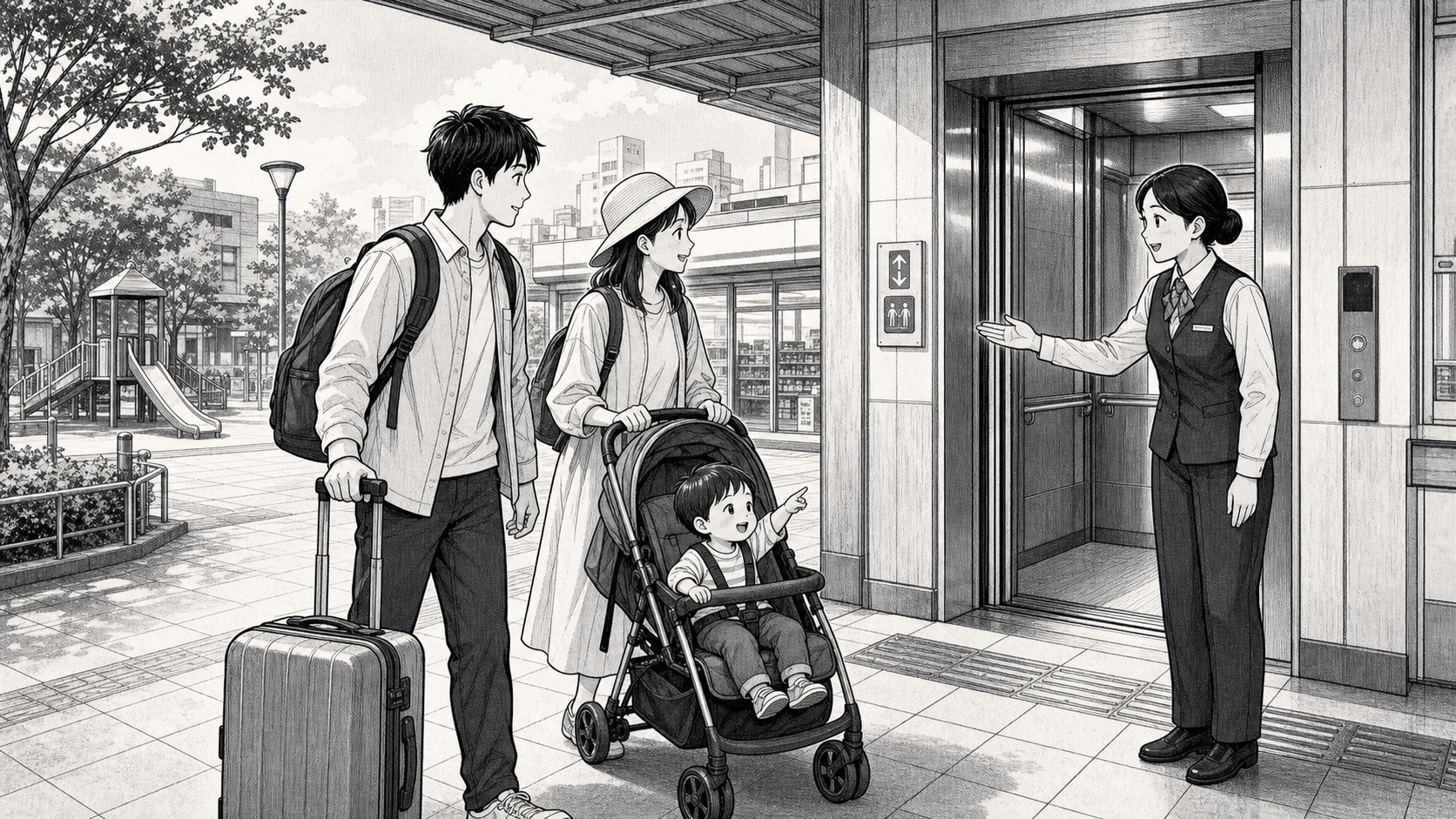
Japan’s extensive rail network is one of the most efficient ways to travel with children. Most major stations have elevators, escalators, and elevators that accommodate strollers, though some older stations may require navigating stairs. Shinkansen (bullet trains) offer smooth rides with spacious seating options, including family compartments that can be reserved for privacy. For everyday train travel, consider purchasing a Suica or Pasmo IC card for easy boarding through automatic gates. During peak hours, trains can be crowded, so traveling during off-peak times or utilizing designated family seating areas can make the journey more comfortable. Many train lines also feature characters and themes that appeal to children, making the ride itself part of the adventure.
Buses and Taxis
While trains are the primary mode of transportation in Japan, buses and taxis offer convenient alternatives, especially for shorter distances or when carrying luggage. City buses are generally stroller-friendly, though drivers may require folding strollers for storage. Taxis provide door-to-door service and can accommodate car seats if requested in advance. For families with young children, consider hiring a taxi for airport transfers or for traveling between distant attractions during a single day. Many taxi companies now offer English-speaking drivers and vehicles equipped with child seats for an additional fee. In rural areas or when visiting places not well-served by trains, a rental car might be the most practical option for families.
Renting Cars in Japan
Renting a car offers maximum flexibility for families, particularly when visiting rural areas, hot springs resorts, or locations outside major transit lines. International driving permits are required for most foreign drivers, and these can be obtained before arriving in Japan. Rental cars come equipped with GPS navigation systems that can display routes in English and highlight family-friendly stops along the way. Some rental companies offer vehicles with built-in child seats or can install them upon request. Driving in Japan is generally safe with well-maintained roads and clear signage, though parking can be challenging and expensive in urban centers. For families planning extensive road trips, consider renting a Japanese minivan known as a “wagon,” which offers ample space for passengers and luggage while being compact enough for narrow country roads.
Attractions and Activities for Children
- World-class theme parks like Tokyo Disneyland and Universal Studios Japan
- Interactive museums and cultural experiences designed for young visitors
- Beautiful parks, gardens, and outdoor spaces perfect for family exploration
Tokyo’s Family Hotspots
Tokyo offers an abundance of attractions that captivate children of all ages. Tokyo Disneyland and DisneySea provide magical experiences with familiar characters uniquely adapted to Japanese hospitality. Sanrio Puroland, featuring Hello Kitty and other Sanrio characters, is a must-visit for young fans. For educational fun, the National Museum of Nature and Science features interactive exhibits and dinosaur displays that engage children’s curiosity. Ghibli Museum, dedicated to the works of Studio Ghibli, offers a whimsical journey through the animation process, though tickets must be booked well in advance. Ueno Park houses multiple museums, a zoo, and seasonal festivals, providing a full day of exploration. The teamLab Borderless digital art museum creates immersive, interactive environments where children can play and discover through light and technology. Don’t miss the observation decks in Tokyo Skytree or Roppongi Hills for breathtaking views of the city that children will remember for years.
Kyoto’s Cultural Adventures
Kyoto offers children opportunities to engage with traditional Japanese culture in accessible ways. The Kyoto Railway Museum features vintage trains and hands-on exhibits that delight train enthusiasts. The Kyoto International Manga Museum houses a vast collection of Japanese comics with reading areas where children can immerse themselves in stories. Monkey Park Iwatayama provides an opportunity to see Japanese macaques up close after a short hike, often a highlight for animal-loving children. For a hands-on cultural experience, families can participate in traditional crafts like making wagashi (Japanese sweets), folding origami, or trying on kimono. The Kyoto Aquarium features penguins and dolphins, while the Toei Kyoto Park Studio offers movie sets and ninja shows that entertain and educate. Seasonal events like cherry blossom viewing in Maruyama Park or autumn leaves at Arashiyama create memorable family moments. The Kiyomizu-dera temple area, with its wooden stage overlooking the city, provides historical context while being accessible to children with its open spaces and panoramic views.
Osaka’s Entertainment Districts
Osaka is renowned for its vibrant entertainment scene that appeals to families. Universal Studios Japan features popular franchises including The Wizarding World of Harry Potter, Super Nintendo World, and Minion Park, with interactive attractions suitable for various age groups. Osaka Aquarium Kaiyukan, one of the world’s largest aquariums, features a central whale shark and a massive tank that creates an immersive underwater experience. Kids Plaza Osaka is a children’s museum with hands-on exhibits designed specifically for young visitors to explore, play, and learn. Osaka Castle Park combines historical education with open spaces perfect for picnics and play. The Umeda Sky Building’s Floating Garden Observatory offers 360-degree views that impress both children and adults. Donburi Yokocho provides an entertaining food experience where children can try different Japanese dishes in a lively setting. For a unique experience, families can visit CupNoodles Museum Osaka, where children can design their own custom cup noodles and learn about the invention of instant ramen. Tempozan Ferris Wheel offers stunning views of Osaka’s skyline and the harbor, particularly magical when illuminated at night.
Family Dining Experiences
- Restaurants often provide children’s menus and high chairs
- Food safety standards are excellent throughout Japan
- Convenience stores offer familiar snacks and ready-to-eat meals
Western Food Options
Japan’s major cities offer numerous Western dining options that can provide familiar comfort for children unaccustomed to Japanese cuisine. International fast-food chains like McDonald’s, KFC, and Subway are readily available, with some locations featuring unique Japanese adaptations on their menus. Family-friendly restaurant chains like Denny’s, Jonathan’s, and Saizeriya offer affordable meals with picture menus that make ordering easier for non-Japanese speaking families. Pizza restaurants abound, with both international chains and local pizzerias offering familiar options. Many hotels provide Western-style breakfast buffets featuring familiar items like scrambled eggs, toast, and cereal for families who need a taste of home. Large department stores and shopping centers often have food courts with multiple international options, allowing families to choose something appealing to each child’s tastes. For special treats, families can find bakeries with croissants and pastries, ice cream parlors with unique Japanese flavors, and cafes serving familiar drinks.
Japanese Cuisine for Kids
Japanese cuisine offers numerous child-friendly options that introduce young palates to new flavors in approachable ways. Ramen shops provide interactive dining experiences where children can watch chefs prepare noodles and customize their bowls with various toppings. Tempura, with its light, crispy batter, is often well-received by children who enjoy fried foods. Yakiniku (Japanese barbecue) allows families to cook their own food at the table, making it an engaging experience that can be tailored to individual preferences. Conveyor belt sushi restaurants offer entertainment as plates pass by, and many have picture menus or models of dishes for easy ordering. Donburi (rice bowls) with toppings like chicken katsu (tonkatsu) or beef (gyudon) provide familiar comfort with Japanese flavors. Bento box meals offer variety with compartmentalized portions of different foods, appealing to children who like to try multiple items. Okonomiyaki (savory pancakes) and takoyaki (octopus balls) are interactive dining experiences that children can customize with their favorite toppings. Many restaurants offer children’s portions or smaller servings of adult dishes, making it easy to introduce Japanese cuisine in manageable portions.
Convenience Store and Supermarket Finds
Japan’s convenience stores (konbini) are family travel lifelines, offering affordable, ready-to-eat meals and snacks that children often find appealing. FamilyMart, 7-Eleven, and Lawson stores throughout Japan carry onigiri (rice balls), sandwiches, and bento boxes that make quick, satisfying meals. These stores also provide an array of drinks, including familiar juices and bottled teas. Many konbini have seating areas where families can rest and enjoy their purchases. Supermarkets offer even greater variety, with dedicated sections for children’s snacks, character-themed products, and western-style foods. Don’t miss the bakery sections with seasonal bread and pastries that often feature popular children’s characters. Department store food courts provide a wide selection of ready-to-eat options from different Japanese regions, allowing families to sample local specialties without committing to a full meal. For families with infants, major supermarkets and drug stores sell disposable diapers, baby wipes, and other necessities. The refrigerated sections in both convenience stores and supermarkets offer an impressive array of high-quality sandwiches, salads, and prepared meals that can be enjoyed anywhere.
Conclusion
Japan proves to be an exceptionally kid-friendly destination with its safe environment, efficient infrastructure, and abundance of family-oriented attractions. While cultural differences may present initial challenges, Japan’s hospitality and child-friendly amenities make it an excellent choice for family travelers. With proper planning and an open mind to cultural experiences, families can create unforgettable memories in the Land of the Rising Sun. The combination of educational opportunities, entertainment options, and comfortable accommodations ensures that Japan can cater to both children and adults, making each family member’s experience enriching and enjoyable. From the neon-lit streets of Tokyo to the ancient temples of Kyoto, Japan offers diverse experiences that can be adapted to any age group, ensuring that a family trip to Japan becomes a cherished adventure for all.