
- Why Japanese Cities Feel So Clean: A Guide for Tourists
- Quick Answer: Why Are Japanese Cities So Clean?
- Cultural Foundations of Cleanliness
- Practical Systems and Infrastructure
- Social Norms and Personal Responsibility
- Practical Steps for Tourists
- What to Watch For and Common Mistakes
- Realistic Examples
- Final Checklist for Tourists
- Conclusion
Why Japanese Cities Feel So Clean: A Guide for Tourists
Japanese cities are renowned worldwide for their exceptional cleanliness, often appearing spotless despite having large populations. This remarkable phenomenon results from a powerful combination of cultural values, practical systems, and social norms that work together to maintain clean urban environments. For tourists visiting Japan, understanding these factors not only explains what you observe but also helps you navigate and respect local customs during your stay.
Quick Answer: Why Are Japanese Cities So Clean?
Japanese cities remain clean due to a combination of cultural values that emphasize cleanliness as a virtue, sophisticated waste management systems requiring meticulous sorting, strong social expectations that individuals properly dispose of their waste, and community-based initiatives that maintain public spaces. Unlike many countries where littering might be common or waste management is less organized, Japan has developed a comprehensive approach where cleanliness is everyone’s responsibility.
As a tourist, you’ll notice that public trash cans are relatively scarce in Japan. This isn’t because Japanese people litter less, but because they carry their waste until they can properly sort and dispose of it at home or in designated areas. Understanding this system will help you navigate Japan’s urban environments respectfully and effectively.
Cultural Foundations of Cleanliness
- Deep-rooted cultural values emphasizing cleanliness and order
- Education system’s focus on personal and environmental responsibility
- Historical influences from Shinto and Buddhist traditions
Mottainai: The Japanese concept of avoiding waste
The Japanese concept of “Mottainai” embodies a deep respect for resources and a refusal to waste anything unnecessarily. This traditional value, which dates back centuries, teaches that nothing should be discarded without consideration of its potential value. In modern Japan, Mottainai has evolved to encompass environmental sustainability, influencing everything from packaging design to consumption habits.
As a tourist, you might encounter Mottainai in various ways. For example, you’ll notice that many Japanese restaurants serve smaller portions to minimize food waste, and shops often provide minimal packaging. When you receive a beautifully wrapped gift or purchase something in excessive packaging, understand that this reflects a different cultural approach to presentation rather than waste.
Cleanliness as a reflection of personal and social virtue
In Japanese culture, cleanliness is intrinsically linked to moral character and social standing. The traditional saying “kirei” (clean) carries connotations not just of physical cleanliness but of spiritual purity and moral integrity. This perspective transforms cleaning from a mundane chore into a virtuous practice that reflects one’s respect for others and the community.
Schools emphasize this connection through daily cleaning routines where students and teachers alike participate in maintaining their school environment. This practice instills the idea that cleanliness is everyone’s responsibility and a shared value that strengthens social bonds. As a tourist, you might notice this value reflected in how Japanese people maintain public spaces, transportation, and even their homes.
Practical Systems and Infrastructure
- Highly efficient waste management and recycling systems
- Extensive public cleaning initiatives and services
- Thoughtful urban planning that minimizes littering opportunities
Advanced sorting and processing of recyclable materials
Japan’s waste management system represents one of the most sophisticated and comprehensive in the world. The country requires meticulous sorting of waste into multiple categories, often including burnable, non-burnable, plastic, paper, glass, and metal. Municipalities provide detailed guidelines and color-coded collection systems to ensure proper sorting.
For tourists, navigating this system can be challenging. Most public areas have limited trash cans because waste is typically sorted and disposed of at home or in designated areas. When you do find public trash facilities, you’ll notice they often have multiple compartments for different types of waste. If you’re unsure about proper disposal, it’s acceptable to carry your waste until you can ask your hotel host or consult multilingual guides available at tourist information centers.
Community-based cleaning activities and volunteer programs
Community plays a vital role in maintaining Japan’s urban cleanliness through organized volunteer programs and neighborhood associations. Regular “kōen shūri” (park cleaning) and “gaijin sōji” (street cleaning) activities bring residents together to maintain shared spaces. These community efforts often involve local businesses, schools, and religious organizations, creating a network of stakeholders invested in cleanliness.
Neighborhood associations (chōnaikai) coordinate these activities and distribute cleaning supplies, fostering a sense of collective ownership. Additionally, seasonal cleaning campaigns before major festivals and events mobilize entire communities, reinforcing the cultural importance of maintaining clean public spaces.
Social Norms and Personal Responsibility
- Strong social expectations regarding public cleanliness
- Individual habits of carrying personal trash until proper disposal
- Business practices that maintain clean commercial spaces
The role of neighborhood associations in maintaining local cleanliness
Neighborhood associations (chōnaikai) form the backbone of community-level cleanliness efforts in Japan. These volunteer organizations, present in most residential areas, coordinate regular cleaning schedules, distribute waste collection calendars, and organize community cleanup events. They often maintain shared cleaning equipment and establish guidelines for waste disposal specific to each neighborhood.
The associations also serve as channels for communicating municipal waste policies and changes in collection schedules to residents. Through their organizing efforts, neighborhood associations create social mechanisms that make cleanliness a collective responsibility rather than an individual burden, ensuring that standards are maintained consistently across communities.
Tourist education and adaptation to local cleanliness standards
Japan has developed sophisticated systems to educate visitors about local cleanliness standards while accommodating increasing tourism. Public spaces feature multilingual signage explaining waste separation rules, and tourist information centers provide detailed guides on proper waste disposal. Many hotels and accommodations include instructions for guests on Japanese waste practices.
Despite cultural differences, most tourists quickly adapt to carrying their trash until finding appropriate disposal points. The phenomenon of “clean tourism” has emerged, with many travelers expressing appreciation for Japan’s cleanliness and often adopting these practices in their home countries. This cross-cultural exchange demonstrates how Japan’s cleanliness standards can influence global environmental consciousness.
Practical Steps for Tourists
- Carry a small bag for your trash until you can properly dispose of it
- Learn the basic waste categories: burnable, non-burnable, plastic, paper, glass, and recyclables
- Observe locals when in doubt about proper waste disposal
- Ask your hotel host or accommodation staff about local waste practices
- Utilize convenience stores for disposal if you need to get rid of trash quickly
When visiting Japan, the most important step is to adjust your expectations about public trash cans. Unlike many Western countries where public bins are abundant, Japan has relatively few public trash facilities. This design choice encourages proper waste sorting and disposal at home or in designated areas.
Start by carrying a small, foldable bag in your purse or backpack for collecting trash during your day out. When you need to dispose of waste, look for convenience stores, which typically have trash bins near their entrances. Many train stations also have waste disposal areas, though these may be limited during certain hours or in smaller stations.
If you’re staying in a traditional ryokan or guesthouse, ask your host about their waste disposal system. Many provide specific instructions for guests, including which items can be flushed (like toilet paper in some areas) and which need to be sorted. Some accommodations may ask you to separate your waste before they collect it for proper disposal.
What to Watch For and Common Mistakes
- Assuming all public areas have trash bins (they typically don’t)
- Flushing items down the toilet that shouldn’t be flushed (varies by region)
- Not separating recyclables properly
- Littering, even small items like cigarette butts or food wrappers
- Disposing of food waste in regular trash bins
One common mistake for tourists is assuming that Japan’s clean streets mean littering is acceptable. In fact, social expectations around cleanliness are quite strict, and littering is generally frowned upon. Even small items like cigarette butts, food wrappers, or bottle caps should be properly disposed of.
Another challenge is navigating Japan’s complex waste sorting system. What might be considered recyclable in your home country might require different sorting in Japan. For example, plastic bottles typically need their caps removed, labels may need to be separated, and the bottle itself might need to be rinsed before disposal.
Toilet paper disposal varies by region in Japan. In some areas, toilet paper can be flushed, while in others, it should be placed in a provided receptacle. When in doubt, observe what others are doing or ask your accommodation host for guidance.
Realistic Examples
Consider a typical day in Tokyo: You finish lunch at a restaurant and have a plastic drink container and food wrapper. Unlike in many countries where you might dispose of these in a public bin outside the restaurant, in Japan, you would likely carry these items with you. Later, when you visit a convenience store to purchase a snack, you might notice bins near the entrance for different types of waste. You would then sort your items accordingly before disposing of them.
Another example: During cherry blossom season in parks, you’ll see families picnicking under the trees. Despite the large crowds, the parks remain remarkably clean. This is because visitors typically pack out everything they bring in, often using special bags provided by the park for collecting their waste before proper disposal.
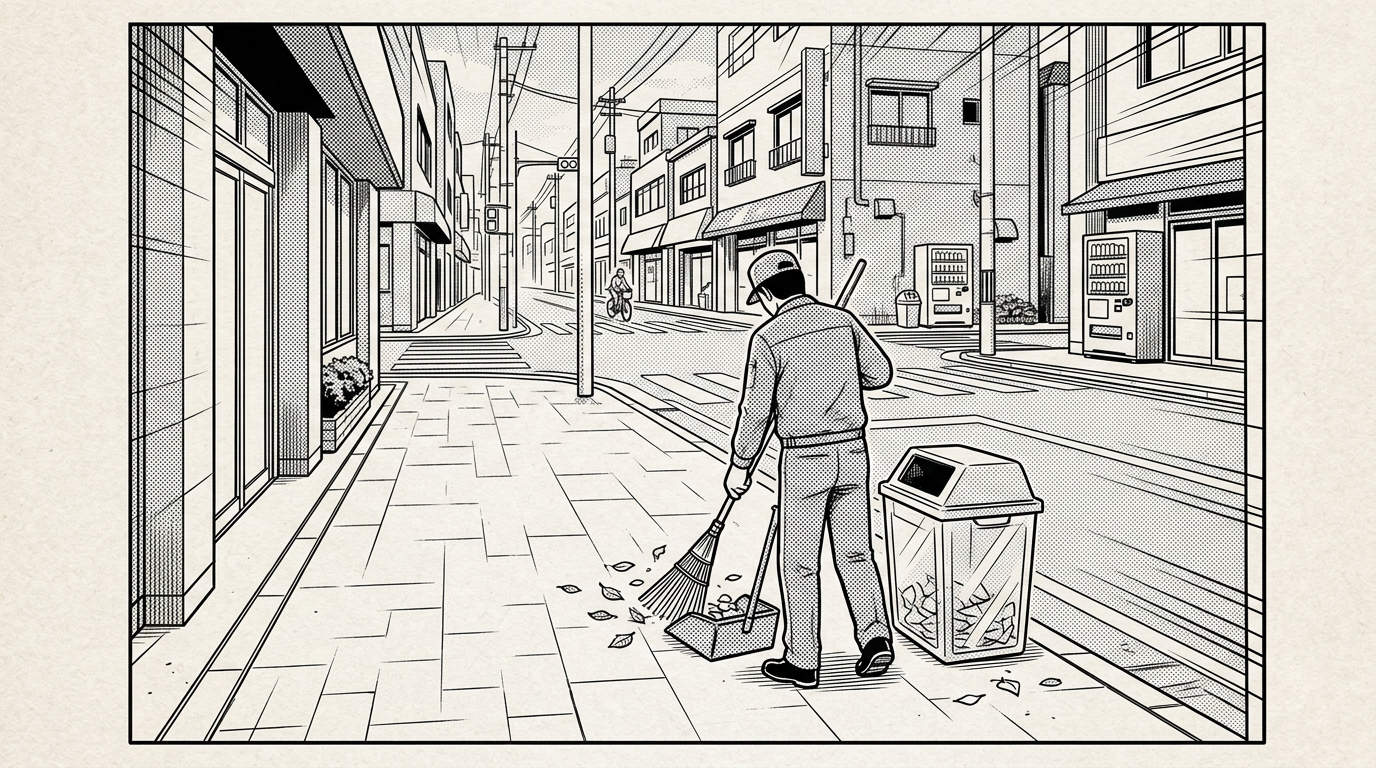
In Kyoto’s historic districts, you might notice shopkeepers regularly sweeping the sidewalks in front of their establishments. This practice reflects the cultural expectation that businesses take responsibility for maintaining the cleanliness of their immediate surroundings, contributing to the overall cleanliness of the area.
Final Checklist for Tourists
- Carry a small trash bag with you during daily outings
- Learn basic Japanese waste categories: burnable, non-burnable, plastic, paper, glass, and recyclables
- Observe locals when unsure about proper waste disposal
- Ask accommodation staff about local waste practices
- Use convenience stores or train stations for waste disposal when needed
- Never litter, even small items
- Separate recyclables properly when disposing of waste
- Respect local customs regarding cleanliness and waste management
Conclusion
The cleanliness of Japanese cities results from a powerful combination of cultural values, practical systems, and social norms. While not without challenges, particularly in managing waste from a growing consumer culture and increasing tourism, Japan’s approach demonstrates how collective responsibility and thoughtful infrastructure can create remarkably clean urban environments.
For tourists, understanding these factors helps navigate Japan’s urban environments respectfully and effectively. By carrying your waste, learning basic sorting practices, and observing local customs, you can participate in maintaining Japan’s clean spaces while enjoying your visit. The integration of traditional values like Mottainai with modern technological solutions creates a sustainable model that other nations can learn from.
As cities worldwide grapple with waste management and environmental sustainability, Japan’s experience offers valuable insights into how cultural attitudes, educational systems, community engagement, and practical infrastructure can work together to maintain urban cleanliness. This holistic approach to cleanliness not only improves the quality of urban life but also reflects a deeper relationship between people and their environment that continues to evolve while respecting tradition.