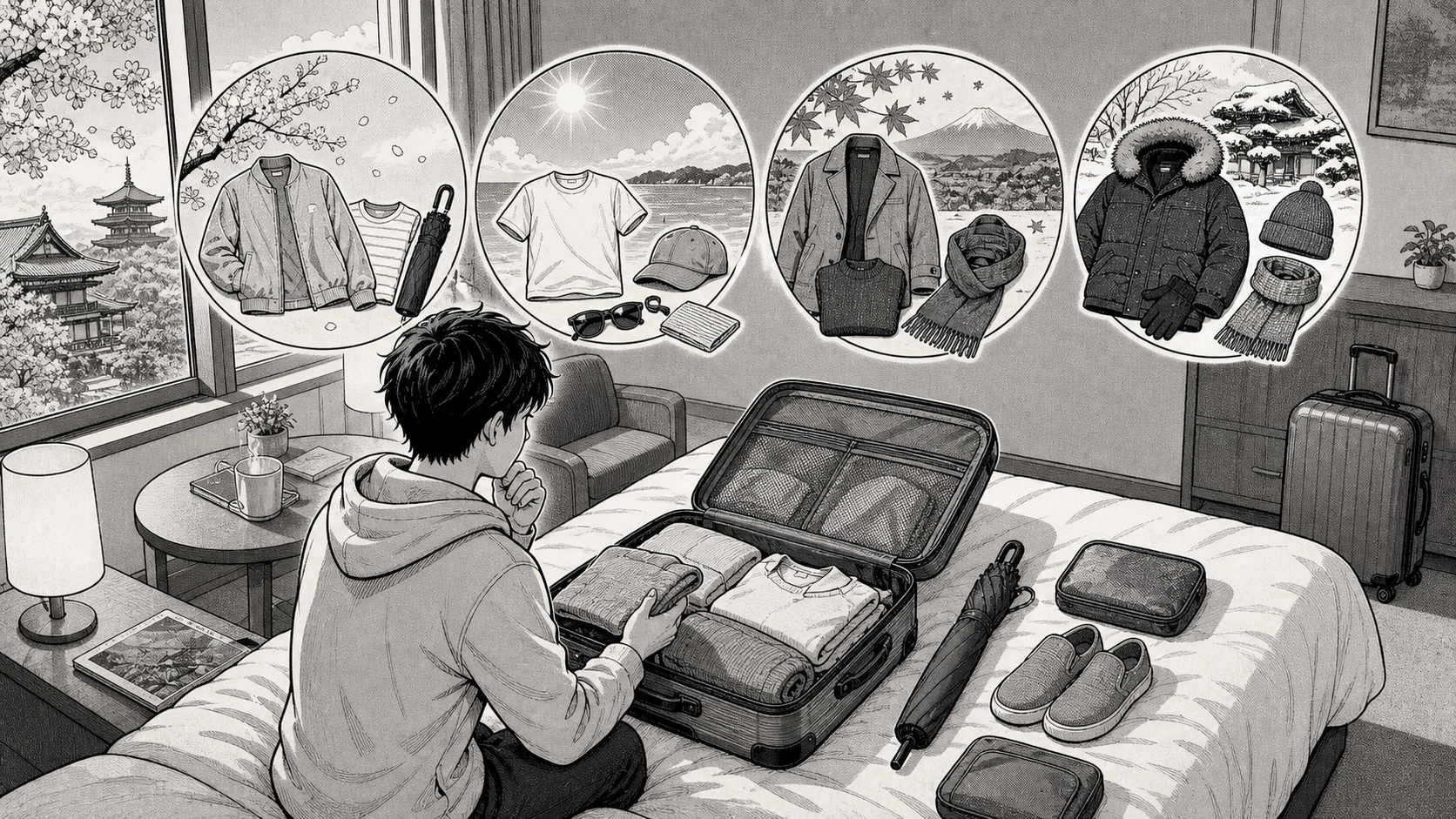
Japan’s four distinct seasons each offer unique experiences and weather conditions, making proper packing essential for a comfortable and enjoyable trip. From cherry blossoms in spring to snowy landscapes in winter, this guide will help you prepare for each season’s specific needs while respecting local customs and cultural expectations.
Spring Packing (March-May)
- Mild temperatures ranging from 10-20°C
- Cherry blossom season (late March to early April)
- Occasional rain showers
- Allergy season for pollen-sensitive travelers
Clothing Essentials
Light layers are ideal for spring weather in Japan. Pack long-sleeved shirts, light sweaters, and a medium-weight jacket that can be easily added or removed. T-shirts and blouses are perfect for warmer days. Include a light scarf that can be used for both style and added warmth during cooler evenings. For cherry blossom viewing, consider bringing a light picnic blanket for sitting outdoors.
Footwear
Comfortable walking shoes are essential as you’ll likely be exploring parks and temples during cherry blossom season. A pair of waterproof shoes or boots is recommended for occasional spring rain. For more formal occasions, such as visiting temples or traditional restaurants, consider bringing slip-on shoes that are easy to remove and put back on.
Accessories
A compact umbrella is a must-have for spring’s unpredictable showers. Consider packing a stylish haneri (traditional Japanese collar covers) if you plan to visit upscale restaurants. For cherry blossom viewing, a small backpack or tote bag is useful for carrying personal items and possibly a picnic. Don’t forget a sun hat for protection during sunny days.
Health Items
Antihistamines and allergy medication are crucial if you’re sensitive to pollen, which can be particularly intense in Japan during spring. Pack basic first-aid supplies including band-aids, pain relievers, and any personal medications you require. Eye drops can be helpful for pollen irritation, and consider bringing a face mask for particularly high-pollen days.
Summer Packing (June-August)
- Hot and humid weather (25-35°C)
- Rainy season in early July
- High humidity throughout
- Typhoon season possibility
Light Breathable Fabrics
Natural fabrics like cotton, linen, and rayon are ideal for Japan’s hot, humid summers. Pack loose-fitting clothes that allow air circulation. Include several t-shirts, light blouses, shorts, and skirts. For men, lightweight trousers are more appropriate than shorts in many settings. Quick-dry clothing is especially useful for staying comfortable during long days of sightseeing.
Rain Protection
A compact, high-quality umbrella is essential during Japan’s rainy season and typhoon season. Consider bringing a lightweight rain jacket or poncho that can be easily stored in your bag. Waterproof shoe covers or extra pairs of shoes are practical for rainy days. Don’t forget waterproof bags to protect electronics and important documents from moisture.
Sun Protection
High-SPF sunscreen is a must for protecting your skin from Japan’s intense summer sun. A wide-brimmed hat and UV-protective clothing will provide additional coverage. UV-protective umbrellas are popular in Japan and can be both functional and fashionable. Sunglasses with UV protection will help shield your eyes from glare during bright sunny days.
Hydration Essentials
A reusable water bottle is essential for staying hydrated in Japan’s hot summers. Electrolyte tablets or powder can help replenish lost minerals. Consider bringing a small, portable fan or cooling towel for relief during particularly hot days. Japan’s convenience stores offer affordable drinks, but having your own bottle can be more economical and environmentally friendly.
Autumn Packing (September-November)
- Pleasant temperatures (15-25°C)
- Beautiful fall foliage
- Decreasing humidity
- Cooler evenings
Layering Options
Autumn in Japan calls for versatile layering. Pack light sweaters, cardigans, and long-sleeved shirts that can be worn alone or layered. A medium-weight jacket or light coat is essential for cooler days and evenings. Include scarves that can add warmth and style. Consider bringing a versatile dress or skirt that can be dressed up or down with appropriate layers.
Foliage Viewing Essentials
For enjoying Japan’s spectacular fall foliage, bring a camera or smartphone with extra batteries and storage. A small notebook and pen can be useful for jotting down notes or sketching scenes. Consider packing a thermos for hot drinks during chilly viewing sessions. A comfortable blanket can be useful for sitting in parks while enjoying the autumn colors.
Comfortable Footwear
Walking shoes with good grip are ideal for autumn, especially if you’ll be visiting mountainous areas for foliage viewing. Waterproof shoes are recommended as autumn can bring rain. For more formal occasions, consider loafers or ankle boots that can be worn with both casual and dressier autumn outfits. Include extra socks for changing if your feet get damp.
Weather Protection
A light jacket or windbreaker is essential for autumn’s cooler evenings and breezier days. An umbrella or compact rain jacket is still practical as autumn can be rainy. Consider bringing hand warmers for particularly chilly days. A hat or beanie can provide extra warmth during early morning or late evening activities.
Winter Packing (December-February)
- Cold temperatures (0-10°C in most areas)
- Snow in northern and mountainous regions
- Dry air
- Shorter daylight hours
Warm Clothing
For Japan’s winter, pack thermal underwear as a base layer. Include sweaters, fleece jackets, and a heavy winter coat for outdoor activities. Long pants are recommended, with thermal leggings if you’ll be spending extended periods outdoors. Consider bringing a down vest for additional insulation without bulk. Wool or fleece hats are essential for keeping warm.
Cold Weather Accessories
Warm gloves or mittens are crucial for protecting your hands from the cold. Scarves or neck gaiters help protect your neck and face from the chilly winds. Thermal socks and waterproof boots are necessary for snowy conditions. Consider bringing hand warmers for particularly cold days. Moisturizer is important for combating dry winter air.
Snow Gear
If visiting northern Japan or mountainous regions, waterproof and insulated snow boots are essential. Snow pants or waterproof trousers will keep you dry in snowy conditions. Goggles or sunglasses with UV protection are important for snow glare. For activities like skiing, bring appropriate gear or plan to rent equipment locally. Ice cleats can provide extra traction on icy walkways.
Indoor Comfort
Since Japanese homes and buildings may be heated differently than you’re accustomed to, pack layers that can be easily removed when moving indoors. Include comfortable slippers for indoor wear, as shoes are typically removed at homes and some accommodations. A moisturizing hand cream and lip balm are essential for combating dry indoor heating. Consider bringing eye drops if dry air affects your eyes.
Conclusion
Packing appropriately for Japan’s distinct seasons will ensure you stay comfortable and can fully enjoy the unique experiences each period offers. Remember to check regional weather forecasts before your trip, as conditions can vary significantly between northern and southern parts of Japan. With the right preparation, you’ll be ready to embrace all the beauty and cultural richness Japan has to offer throughout the year.